
Global Disability Summit
The Global Disability Summit (GDS) is the only global mechanism through which governments, international actors, and organizations of persons with disabilities worldwide commit to collective action for disability inclusion.
Launched in 2017, GDS gathers global actors to advance inclusive development action. It is co-hosted by one or more governments and the International Disability Alliance (IDA) as the permanent co-host. This collaborative approach includes both government representatives and Organizations of Persons with Disabilities (OPDs), ensuring that disability inclusion remains a central focus.
About GDS2025
GLOBAL DISABILITY SUMMIT

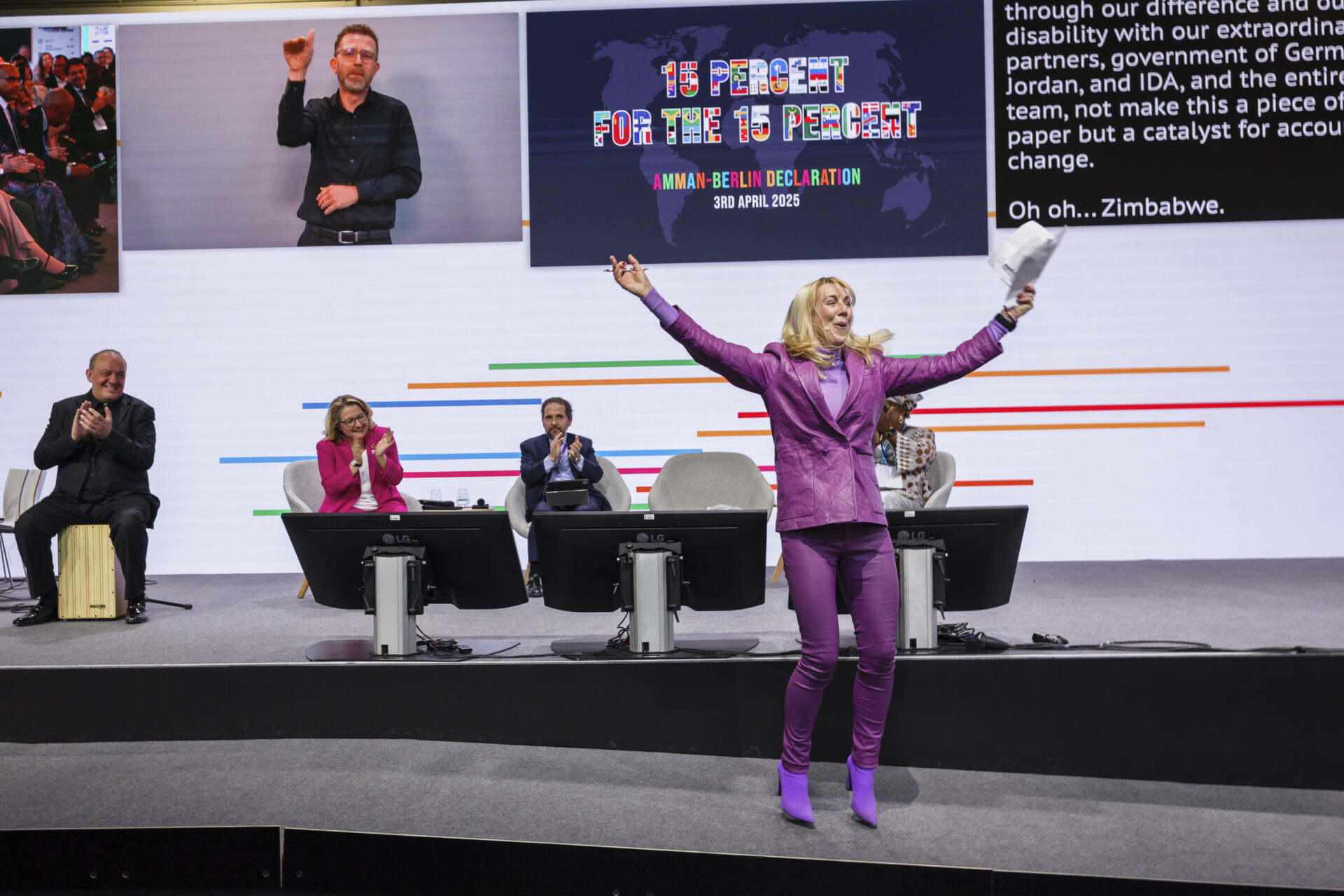
Co-hosted in 2025 by Germany, Jordan, and the International Disability Alliance (IDA), the third Summit was held from 2-3 April 2025 in Berlin. It brought together over 4,700 participants from 160+ countries in Berlin. With a strong focus on national ownership and inclusive international cooperation, GDS 2025 concluded with the adoption of the Amman-Berlin Declaration and 800 new commitments by Governments, private sector and development partners to accelerate disability inclusion across sectors.

Permanent co-host of the Global Disability Summit
International Disability Alliance
As the permanent co-host of the Global Disability Summit, the International Disability Alliance (IDA) provides stewardship for continuity across summit editions. In this role, IDA works in close partnership with governments and other actors to shape the Summit’s agenda and anchor OPD leadership within the GDS cycle. IDA mobilizes participation, monitors accountability measures, and convenes follow-ups at different levels to ensure that the GDS remains a credible, ongoing global mechanism for disability inclusion.

Amman-Berlin
Declaration
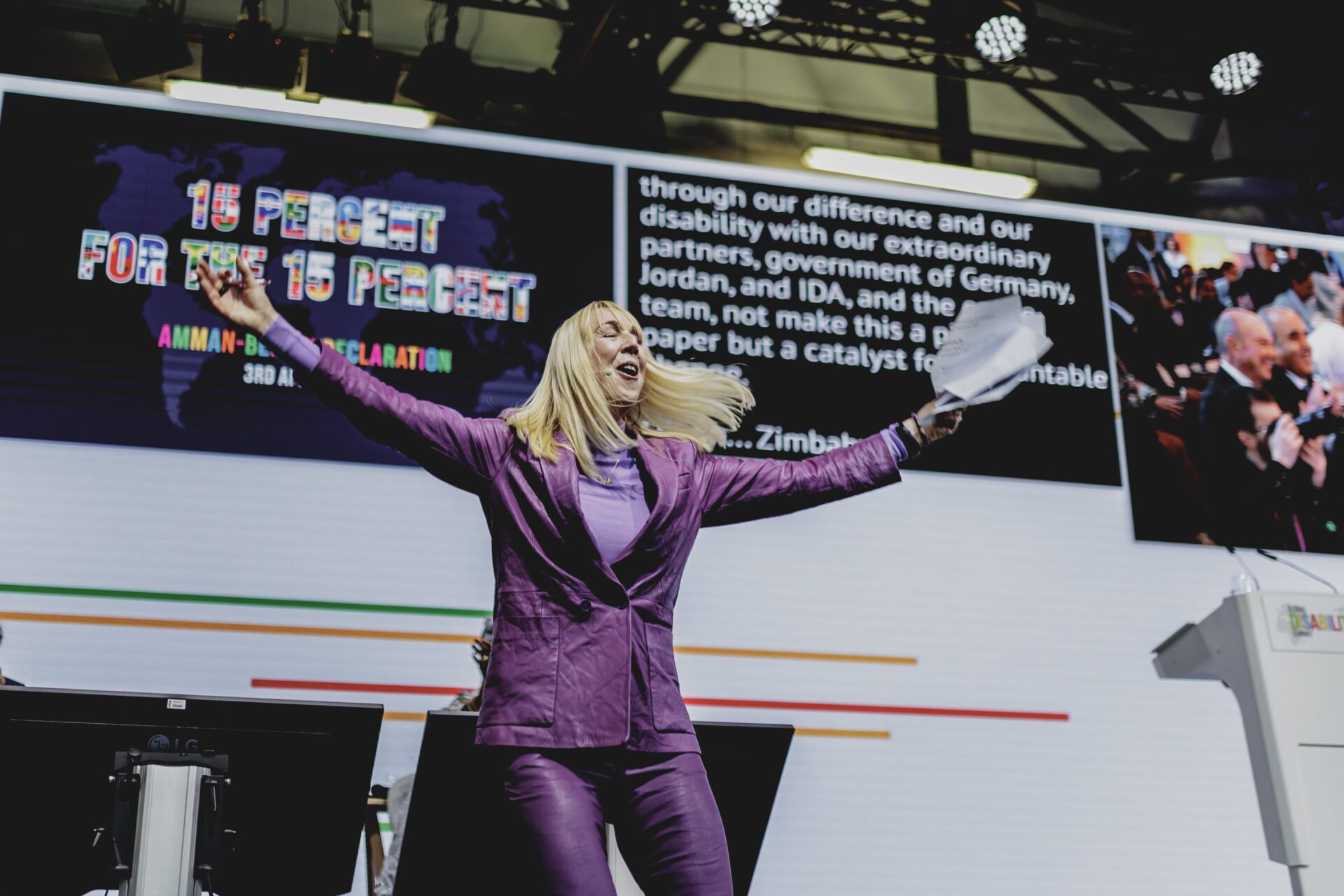
The Amman-Berlin Declaration calls for a 15% for 15% target with endorsing countries and organizations triving to ensure that at least 15 percent of international development programs being implemented at the country level pursue disability inclusion as an objective.
90 governments and organizations endorsed the declaration already during the time of the summit. The full list of endorsers and supporters is now available through the following link.
Overview of Commitments
for GDS 2025
The new GDS Commitments Portal is now live! Browse through the 800 commitments made at GDS 2025 and also the previous summits. You can filter and download your selection based on themes, region, scope, organisation and more.
Featured Photos from GDS 2025

Featured Videos
Civil Society Forum
GDS Day 1
GDS Day 2
This website was made possible with funds from the German Federal Ministry of Economic Cooperation and Development (BMZ)
