
As part of our GDS impact series, we are exploring what has changed since commitments were made and how they are being taken forward in practice.
We spoke to ONCE Social Group, the first to form an alliance with other organizations from Spain to make 12 joint commitments out of the total 1,419 made at GDS 2022, which set a precedent for future Summits, with GDS 2025 recording 64 joint commitments.
The National Organization of the Spanish Blind (ONCE), founded in 1938, is a social organization dedicated to the rights and well-being of persons with visual impairments. It fosters social inclusion domestically and advocates for disability rights globally through international cooperation and partnerships like GDS. The ONCE Social Group, in addition to its OPD status, has a recognized public law status by Spain, which, in practice, makes it the public provider of social services for persons with visual impairments.
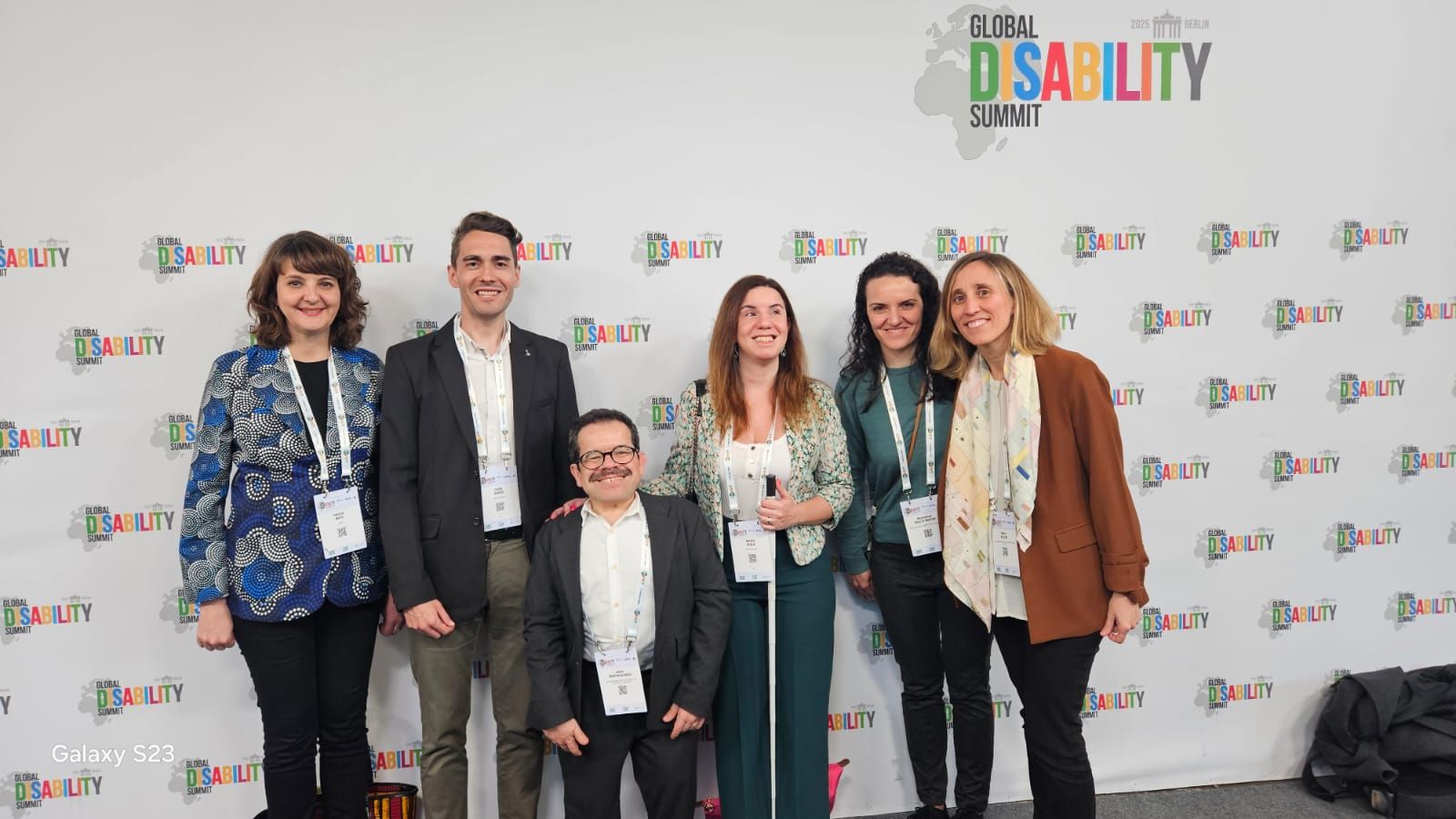
Strategic advantages of the first-ever joint commitment at GDS
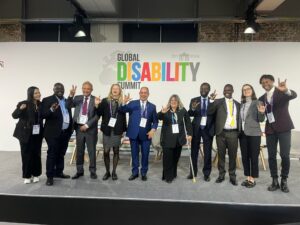
For ONCE, the idea of presenting joint commitments emerged to unify the efforts of key actors in Spanish Cooperation, namely, the Spanish Agency for International Development Cooperation (AECID), the Foundation for the Internationalization of Public Administrations (FIAP), and the General Directorate for the Rights of Persons with Disabilities of the Spanish Ministry of Social Affairs (DGDPD). With an established foundation in disability advocacy, ONCE led and facilitated the process of joint submission collaboration.
On the advantages of this alliance, Mr. Carlos Quirós, , International Affairs Officer from ONCE Social Group commented, “Undoubtedly, the scope of the proposed actions was much greater thanks to this collaboration.” He added that by aligning their initiatives, the partners were able to conceptualize more impactful actions that were ambitious and substantial. It also helped Spanish public cooperation actors deepen their engagement with the complexities of disability inclusion. Instead of operating in isolation, they harnessed their collective strengths to bring forth a more comprehensive and inclusive response to disability rights.
Photographer: Lauren Anders Brown
Building on the impact from the collaboration
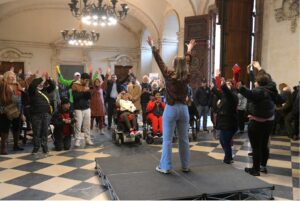
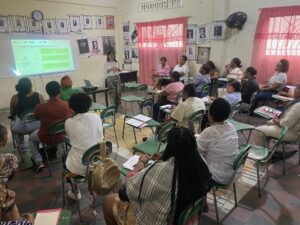
As a testament to the effectiveness of this joint commitment, ONCE, together with its partners, initiated concrete actions following GDS 2022. With AECID, ONCE supported the United Nations Population Fund (UNFPA) in hosting the WeDecide exhibition in Madrid, Spain, aimed at raising awareness about the reproductive and sexual rights of women with disabilities. The ‘We Decide’ programme promotes inclusive policies, improves access to healthcare services, and supports the participation of women and youth with disabilities through data-driven initiatives and partnerships. Similarly, FIAP arranged study visits from youth and culture authorities in Morocco and Tunisia, enabling these stakeholders to integrate a disability perspective into their policies and programmes.
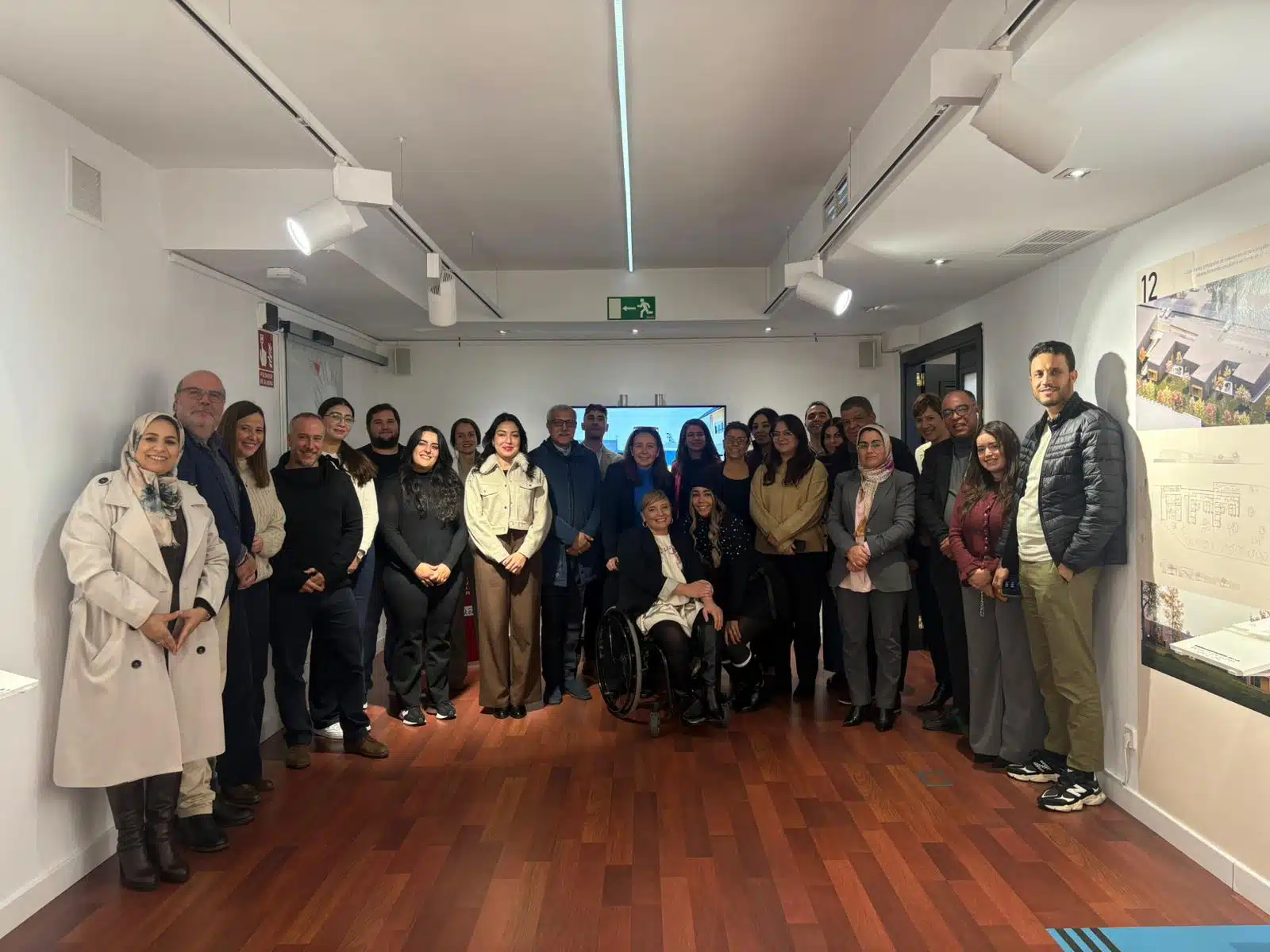
ONCE owes the success of this partnership to “prior collaboration among the stakeholders, mutual trust, and a shared commitment to improving the lives of persons with disabilities, which helped the process move forward.” Mr Quirós adds that this also enabled the expansion of the collaboration in preparation for GDS 2025, as the partners hope to institutionalize this approach for all future Summits.
Sustaining a model of joint action
In 2025, Spanish Cooperation returned to GDS with a second round of commitments and made 17 new commitments at GDS. Mr. Quirós explained that the Cooperation, “has already fully internalized the work of disability inclusion thanks to years of joint efforts.” He added that the alliances and joint coordination among OPDs in Spain, particularly through the Spanish Committee of Representatives of Persons with Disabilities, along with ONCE Social Group’s advocacy efforts, have enabled clear leadership and a common agenda.
To ensure the Spanish Cooperation’s current work is permanently embedded into government policy, the Group notes that it can count on the Spanish government’s commitment to incorporating a disability perspective into its international cooperation. While the Spanish Cooperation focuses primarily on the Spanish population, organizations within the Cooperation, with an international perspective, continue to advocate on matters of foreign policy independently.
Leveraging individual commitments for global partnerships
Acknowledging the benefits of joint commitments with Spanish Cooperation, ONCE Social Group recognized the opportunity to contribute separately through individual commitments. In addition to the joint commitments, ONCE Social Group made three individual commitments at GDS 2025. The Group attributes this expansion of commitments to their role as a matchmaker of international resources in the field of disability inclusion. These commitments focus on their collaboration with development banks, including the World Bank and the Inter-American Development Bank, and on promoting a Euro-Mediterranean Agenda that supports the implementation of the CRPD in the subregion.
Understanding the GDS as a cycle of formulating, monitoring, and reporting on commitments, the ONCE Social Group continues to seek partnerships. The Group recognises the traditional challenges of international development cooperation about fragmentation and duplication of efforts, and through partnerships and joint efforts, they aim to optimize the increasingly scarce international resources for disability inclusion.
Head to the GDS Commitments Portal to read all commitments made by Spanish Cooperation here.