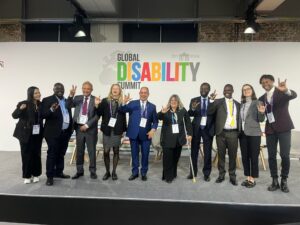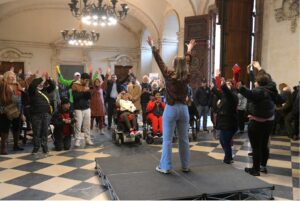

In an innovative demonstration of community engagement, the Global Disability Summit GDS Inclusion Cup emerged as a groundbreaking football tournament in Kenya designed to embrace and showcase the talents of diverse groups of persons with disabilities. Alan Herbert, Executive Director of Black Albinism and organizer of this tournament, recently shared insights into this remarkable initiative, emphasizing its importance in promoting inclusion and challenging societal norms.
The GDS Inclusion Cup was more than just a football tournament; it was a vivid representation of the GDS commitments in action. According to Alan, that the initiative aligns closely with Kenya’s commitments on accessibility, participation, and inclusive public spaces, particularly those related to accessible infrastructure, community participation, and the inclusion of persons with disabilities in social and cultural life. He explained how community-driven initiatives like this one are pivotal for ensuring that GDS commitments translate into sustainable actions, locally grounded efforts that continue beyond the Summit moment.
The Inclusion Cup arose from a pressing need to translate GDS commitments into tangible local actions. Alan recalls the origins of this idea, stemming from the Black Albinism Football Club, Nairobi established in 2019 to foster inclusion among persons with albinism and various disabilities. After a hiatus due to the pandemic, the club resumed in 2021, eager to use football as a vehicle for awareness and advocacy.
“We realized that traditional mobilization methods to convey the values reflected through the Global Disability Summit, specifically on leadership of persons with disabilities, were cost-prohibitive,” Alan explained. “So, we asked ourselves: how can we make participation accessible and engaging for everyone?” The answer was clear: football, a sport that transcends barriers and unites individuals from all walks of life, would serve as the perfect platform.

Inclusive participation requires ensuring accessibility
Designing the tournament required meticulous consideration for inclusivity and accessibility. “We focused on everything from the venue to transportation logistics. Hosting the event at Parklands Sports Club was a deliberate choice due to their commitment to accommodating persons with disabilities,” Alan stated. With accessible facilities and a central location, the club proved to be an ideal host.
Transportation, meaningful participation, and adaptive rules were pivotal in ensuring an inclusive environment. The inclusion of sign language interpreters for Deaf teams and consultation with team representatives about their needs highlighted the commitment to accessibility. “We wanted to ensure everyone had the chance to participate meaningfully,” Alan emphasized, underscoring the importance of collaboration and representation in decision-making processes.
Shifting power and perspective at the local level
“When we planned the tournament, we had already involved county officials in various engagements,” Alan stated, highlighting the proactive approach aimed at rooting inclusion within local governance. The involvement of the National Council for Persons with Disabilities during the event provided valuable insights that could be relayed to higher government levels.
Alan emphasized that counties play a crucial role in catalyzing disability inclusion through tangible, locally led action. He noted that they control essential resources, including sports facilities and public spaces, which can be adapted to promote accessibility. “If counties recognize disability inclusion as a core governance responsibility, we can create sustained opportunities that extend beyond single events like the Inclusion Cup,” he asserted. The event demonstrated a clear demand for inclusive sports programming, making a compelling case for local governments to allocate budgetary resources toward such initiatives.

One of the key outcomes Alan envisions from the Inclusion Cup is the shift from a deficit-based perspective to an asset-based approach within disability communities. “We want to inspire other groups of persons with disabilities to organize their capabilities and aspirations,” he remarked. By connecting various disability communities that typically operate separately, the tournament has the potential to strengthen collective advocacy efforts and reduce fragmentation in the movement for disability rights.
Inclusion as a practice, not a moment
Alan expressed hope that the Inclusion Cup becomes an annual event, paving the way for a sustained inclusive sports culture. His vision extends beyond just football; he dreams of ongoing training programs, accessible facilities, and robust leagues that will offer continuous opportunities for individuals with disabilities. “We need to create an ecosystem where inclusion is supported and celebrated throughout the year, not just on special occasions,” he stressed.
Throughout the interview, Alan underscored the significance of involvement and representation in all aspects of the initiative. He noted the importance of having diverse voices and perspectives not only on the field but also in the planning and execution stages of such events. By fostering an inclusive environment, the Inclusion Cup serves as a powerful platform for advocacy and education, challenging stereotypes about people with disabilities.
—
The GDS Inclusion Cup was made possible with the support of partners, CBM Global Disability Inclusion, United Disabled Persons of Kenya (UDPK), Action Network for the Disabled (ANDY), and Parklands Sports Club.