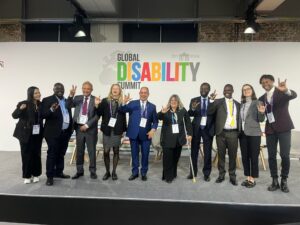

Across the Global Disability Summit (GDS) process, youth-led advocacy has moved from the margins to the center. Beyond policy language, this shift is visible in how young people organize, influence decisions, and insist on follow-through. The Youth Call to Action (YCTA) has emerged as a central expression of this change. YCTA is a tool that youth are using to turn lived experience into political demands and accountability.
We spoke to four youth representatives from Argentina, Ghana, Indonesia and Kenya, to understand their perspectives on how youth-led advocacy is reshaping disability rights. These conversations point to a shared understanding: progress depends on whether commitments move beyond conference spaces and into communities. The youth do not see themselves as beneficiaries of this process but as agenda-setters, partners, and auditors.
Local realities versus global promises
For organizers rooted in community movements, global advocacy only matters if it responds to realities on the ground. Drawing on experience with youth-led organizations in Indonesia, Agus Hasan Hidayat, founder of REMISI, describes the Youth Call to Action as a contested bridge between frontline struggles and global policy spaces like GDS.
Through this bridge, youth advocacy has helped shape concrete targets, including the 15 percent for 15 percent commitment, influencing where attention and funding are directed. But the deeper question remains unresolved. Do these commitments change power and resource flows at the local level? Do youth networks gain greater control over what future summits prioritize?
Presence versus power
Antonio Palma, member of the IDA Youth Committee and representative of the RIADIS Youth Network, and Agus Hasan Hidayat both emphasize that presence without power does little to change outcomes. What matters is who sets priorities, who shapes decisions, and who is trusted to carry commitments forward.
While grassroots movements push agendas upward, youth leadership within institutions is reshaping how those agendas are implemented. As Chairperson of the IDA Youth Committee, Stuart Cyprian Higenyi frames the Youth Call to Action as an initiative that only works when youth are recognized as partners, not consultants.
For the Youth Committee, meaningful participation means being involved in decision-making, especially on issues that directly affect young people. This reflects a core principle of the disability movement: “Nothing about us without us.” When youth are equipped with policy advocacy tools and supported to engage with legal and institutional frameworks, commitments move from symbolic promises to drivers of reform.
Yet, visibility alone is not enough. Youth Fellow at IDA, Esther Nagetey’s assessment work highlights that while awareness of the YCTA is high, deeper engagement remains uneven. Many people know the document exists, but fewer have read it closely or used it as part of their advocacy. This gap is crucial as awareness without ownership does not lead to accountability.
Information versus action
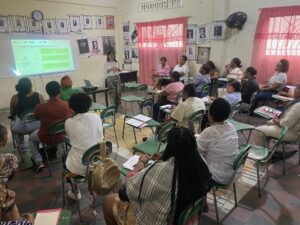
For youth-led accountability to be effective, young people need to understand the YCTA, adapt it to their contexts, and use it strategically in campaigns, policy discussions, and monitoring efforts. Accessible formats, peer learning, community workshops, and digital outreach all help transform recognition into action.
As youth move from shaping commitments to monitoring them, access to information becomes central. Existing commitment platforms often function as static databases. Youth advocates are asking for tools that do more. They want systems that show who is responsible, where progress is stalled, and what leverage points exist at national and regional levels. When commitment data becomes accessible and actionable, youth can ask sharper questions and demand follow-through. Technology, in this sense, is not just about tracking promises but about redistributing power.
Commitments versus consequences
Turning commitments into progress requires accountability structures that clearly show who is responsible, what has changed, and who is still excluded. Looking ahead to 2028, youth see the Youth Call to Action as a structural accountability tool. Progress must be demonstrated through evidence of who is participating, at what level, and with what influence.
The future of GDS will not be defined by the number of commitments made, but by who has the power to shape, track, and enforce them. Youth with disabilities are already doing that work. The task now is to ensure the system makes space for it.