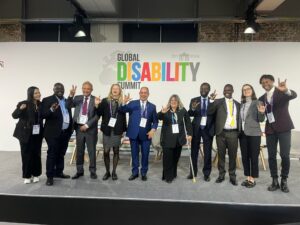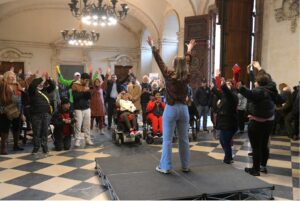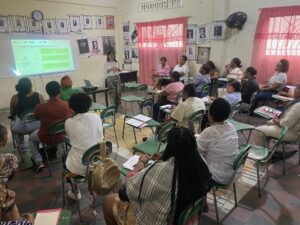

The City of Lyon holds a singular distinction at the Global Disability Summit: it was the only municipality to make commitments at GDS 2022. Those 14 commitments aimed to improve accessibility and promote the participation of persons with disabilities in education, culture, sports, public facilities and public spaces. Three years on, the City has implemented a comprehensive policy, the Disability Action Plan, aimed at ensuring the effective enjoyment of rights and universal accessibility of persons with disabilities. Ms. Sylvie Tomic, Deputy Mayor of Lyon, shared insights from the implementation process with our team.
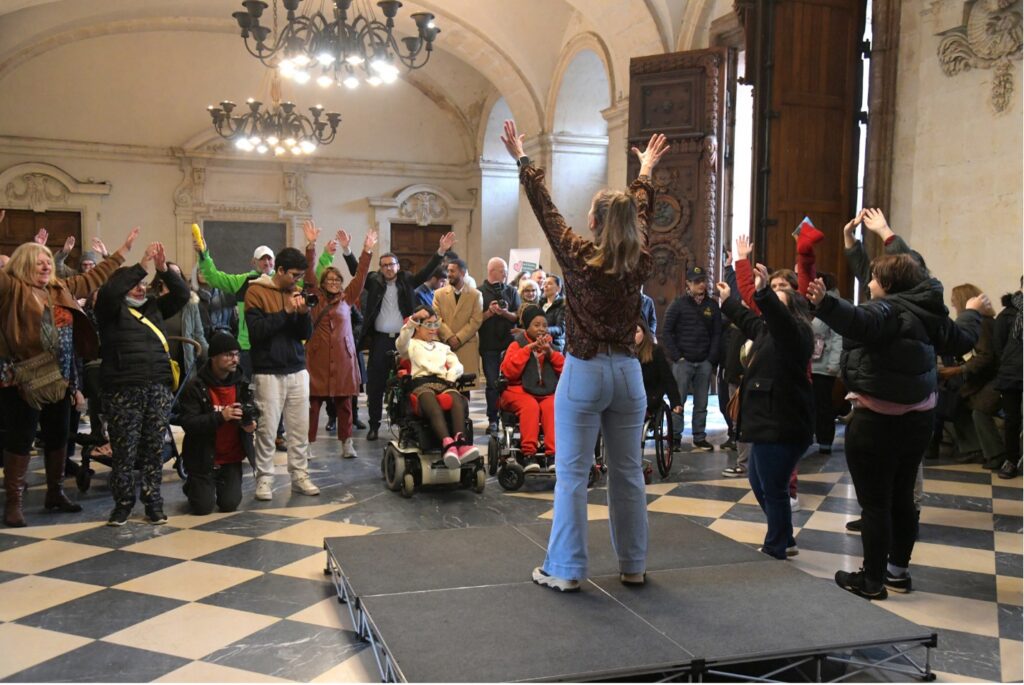
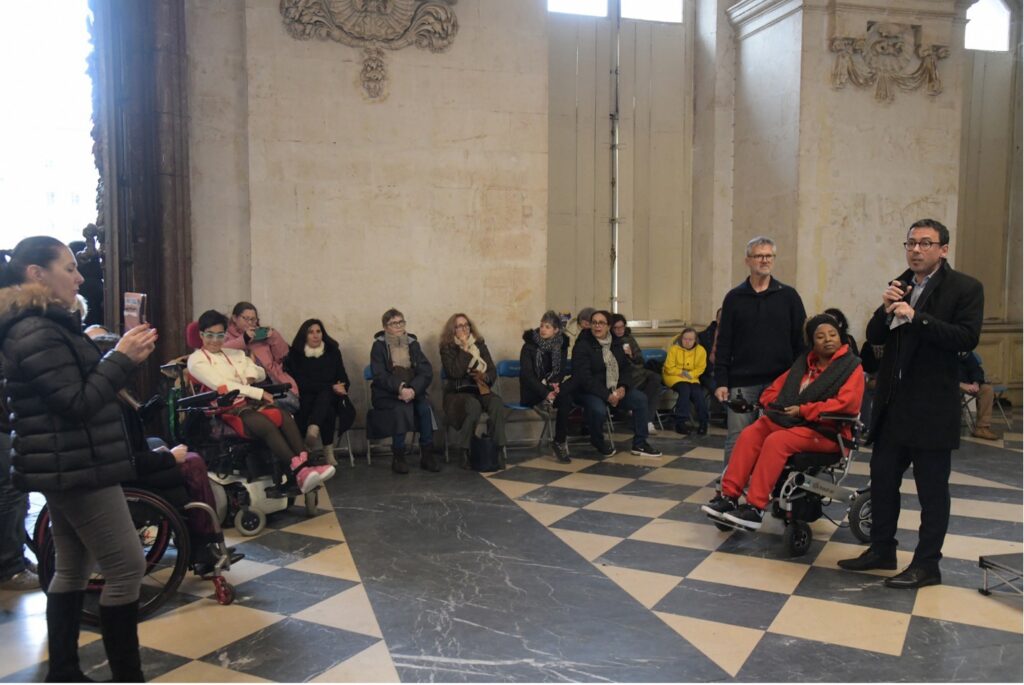
event for the International Day of Persons with Disabilities, December 3, and the inclusive policies led by the City of Lyon.
Collaborating with OPDs from conception
The City of Lyon integrated its GDS 2022 commitments into its Municipal Disability Plan. Launched at the end of 2022, the Disability Action Plan was a highly collaborative process that ensured the participation of organizations of persons with disabilities (OPDs) from the beginning of the design process.
Elaborating on the role of each party in the collaboration, Ms. Sylvie Tomic said, “The City incorporated contributions from members of the executive council and district councillors responsible for disability issues, operational departments, particularly their disability focal points, to share key challenges, highlight existing measures, identify areas for improvement, and propose new actions. The Municipal Accessibility Commission (CCA) and its partner associations, organizations of persons with disabilities (OPDs), were consulted for their observations, to submit amendments, and propose new actions. Numerous discussions also took place with institutional partners on matters within their respective areas of responsibility.”
After these consultations, the City of Lyon Disability Action Plan 2023–2026 was structured around five strategic priorities:
- Reducing the accessibility gap by achieving 50% accessibility of public facilities, strengthening basic accessibility at reception areas in all municipal buildings, consolidating digital accessibility across all city websites, etc.
- Rethinking the city design to be inclusive for all learners by improving accessibility in nurseries, schools, and leisure centres for all learners and parents with disabilities, strengthening lunchtime supervision teams, acquiring adapted equipment and materials, etc.
- Supporting greater everyday autonomy by ensuring better access to affordable and accessible housing, improving the shared use of public spaces, particularly sidewalks and public toilets, strengthening access to culture, sports and major events, supporting disabled parenthood and peer support initiatives, etc.
- Reinforcing the Municipal Accessibility Commission by introducing a citizen vice-chair and new working groups, developing exchanges with anti-ableist associations and collectives, combating the non-take-up of rights and benefits, etc.
- Building an exemplary local authority in its internal operations by training elected officials on ableism, organising the Disability Awareness Fortnight around International Day of Persons with Disabilities (3 December), improving communication and support as an employer for staff members concerned, etc.
Accounting for learning gaps
As of 1st March 2026, 62% of the actions in the plan have already been completed, 25% are currently underway, and 13% have yet to be initiated. A majority of the commitments have been achieved, and more are in the process of being implemented, while some have even undergone operational adjustments after being faced with ground realities.
The progress is measurable across the City’s operations. The employment rate for staff with disabilities rose to 10.89% in 2025, up from 9.95% the previous year, and continues to climb. Since 2023, 476 staff members have completed disability training, with further sessions planned for 2026. The accessibility budget for the 2023–2026 period doubled to €16 million, of which €13.3 million is already spent or committed. The accessibility rate of the City’s public-facing buildings now approaches 42%, and more than 70% of public locations can welcome citizens with a satisfactory level of usability.
Built as a roadmap, the Plan left deliberate space to adapt and incorporate a learning curve. “The Disability Action Plan is not intended to be exhaustive: the actions presented may be expanded, modified, or reformulated over the course of implementation, depending on constraints and opportunities,” shared Ms. Sylvie Tomic.
An illustration of this pivot can be observed in the process of setting up the sports working group in the City. The sports working group was created in 2022, jointly led by the Sports Department and the Equality and Hospitality Mission, to promote the accessibility of sports opportunities.
Supported by the organization Signes de Sens, the working group focused on four action areas:
- Promoting the accessibility of sporting events
- Strengthening facilities for independent practice
- Raising awareness of the existing offer
- Supporting clubs in developing a more inclusive offer
The working group then expanded its scope to include:
- Comprehensive parasport activities inventory made in collaboration with the Sports Office and AFG Autisme
- Considering the travel chain to account for parking spaces during specific events
- Reconfiguring content to bring together able-bodied and disabled participants, as well as people with different types of disabilities and needs whose schedules do not overlap
Inclusion is at the core of this scope expansion with considerations for all and actively trying to avoid isolating persons with disabilities by designing content for interaction between people of all abilities.
The GDS effect
Being part of the GDS process and making commitments at the Summit enabled the City to structure the development of its Plan and define a reference framework for its actions. Now, this Plan serves as a strategic foundation for strengthening the consistency and clarity of municipal initiatives for its various stakeholders, such as the City of Lyon departments, the Metropolitan cities network, and partner associations and institutional actors involved in these areas.
“The City of Lyon already had strong and close ties with associations representing people with disabilities across the territory. The GDS helped to strengthen these connections further and to develop solid working perspectives with organizations representing persons with disabilities, particularly through the development of the Disability Action Plan,” Ms. Tomic reflected.
Lyon’s experience offers a template for what is possible when a city treats disability inclusion as a core function of governance rather than keeping it on the periphery. The City’s journey shows that the GDS cycle gives local governments a structure to turn intention into measurable action, and a community of practice to learn alongside. Lyon’s example invites other cities and local authorities will follow, integrating disability inclusion into their own policies and joining the next GDS cycle, so that what began as one city’s commitment becomes a shared standard for inclusive governance at the local level.